Search For An Episode
Search this site
570 results found
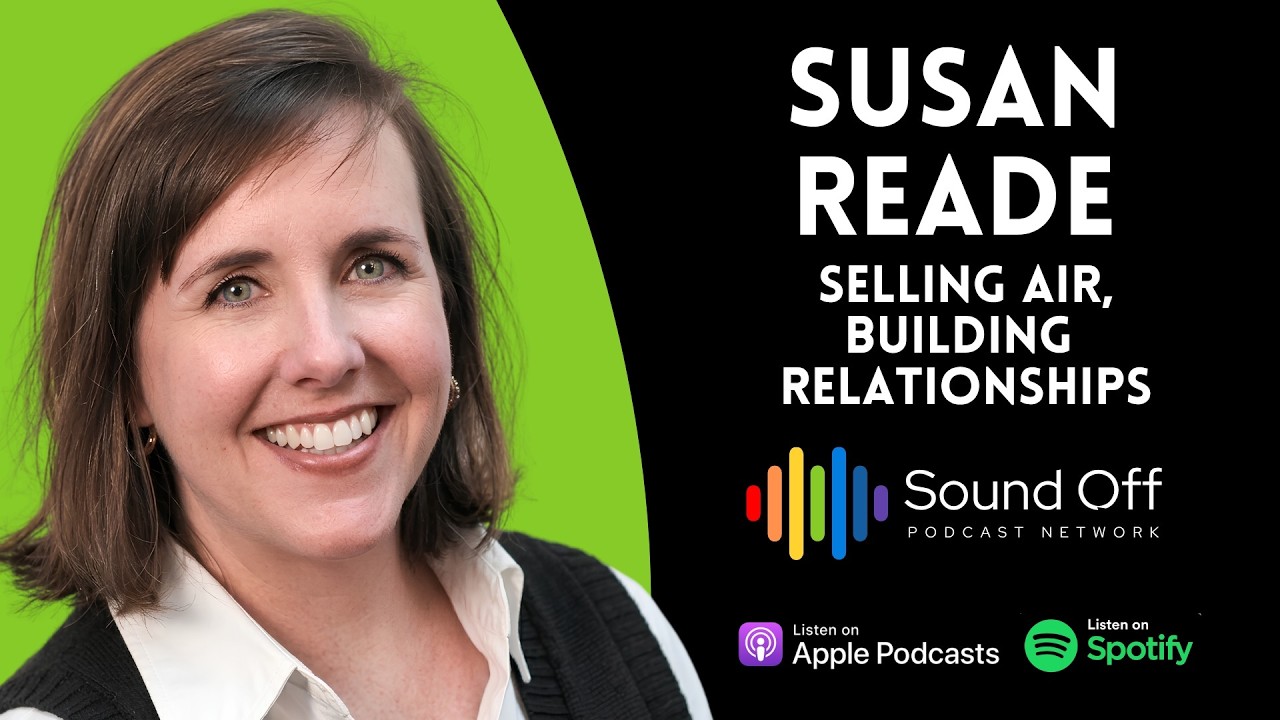
- Susan Reade: Radio Sales, Selling Air, Building Relationships
Susan Reade got her start in Edmonton radio wearing an orange Tina Turner wig and leopard-print pants as CHED’s “Janet from Another Planet.” As she prepares to retire from Stingray, I catch up with her to talk about a career that took her from the morning show to sales and leadership—and why she still believes in radio. Susan shares how a difficult experience as a talk show producer in Vancouver led to selling postage meters at Pitney Bowes. The sales training was valuable; the passion for postage wasn’t there. A chance encounter with former colleague Mike Bowman helped her connect the dots between what she loved and what she was good at. That discovery took her to Toronto to help launch a country station, before eventually bringing her home to Edmonton. We compare notes on our Edmonton years, including her time at Easy Rock, launching Magic 99, and leading sales for The Bear and TSN. I ask what makes someone good at selling radio, how the move from diary ratings to people meters affected advertising rates, and where the industry missed opportunities to build stronger relationships with listeners online. Susan also shares how Marty Forbes and Karl Stark recognized her leadership potential before she saw it herself. We get into the return of local sports talk with Sports 1440 and Jason Gregor, the importance of streaming, and how Dash Sync connects an advertiser’s audio message with a visual on the dashboard. I also explain why I see TuneIn as the Yellow Pages of audio—and why keeping a station easy to find on smart speakers matters to its future. Along the way, we talk about the strength of local radio in Edmonton and Kamloops, what Susan has planned for retirement, and how she responds when someone tells her radio is dead. Please sign up for the SOUNDING OFF Newsletter. All the things that went unsaid on the show. Also we added the Sound Off Podcast to the The Open Podcast Prefix Project (OP3) A free and open-source podcast prefix analytics service committed to open data and listener privacy. You can be a nosey parker by checking out our downloads here.
- Dami Dawson: Has Radio in Nigeria Lost Its Soul?
Did you know that one of the top countries that listen to the Sound Off Podcast is Nigeria? In the last ten years, this is only the 4th episode we have done with a Nigerian. Dami Dawson began his career believing he had the right voice for radio, but quickly learned that a voice wasn’t enough. He studied the craft, worked as a researcher and intern, and eventually moved behind the microphone. Today, he leads digital entertainment initiatives at TVC Communications and manages Rewind 107.9 FM, a station built around music that listeners may not find in their usual playlists. Maybe it's not surprising but Nigerian radio’s struggles mirror our own in North America. Lagos has nearly 80 stations, yet many are chasing ratings, social-media followers and cheaper talent instead of investing in knowledgeable personalities who connect with their communities. Dami doesn’t believe radio is dead. He believes it has lost some of its soul. We also talked about unreliable audience measurement, weak signals, expensive internet access and the pressure to turn radio personalities into social-media influencers. Dami’s advice is refreshingly clear: radio should bring its authority, research and substance to social media—not allow social media to dictate what happens on the air. From Lagos to North America, the lesson is the same: technology changes, platforms change, and measurement changes. But radio only matters when the people making it understand the audience, respect the craft and have something meaningful to say.
- Tim Truax: Let's Go To PodSummit 2026!
How PodSummit Builds Canada’s Creator-Focused Podcast Community Podcasting may sound like a social medium, but creating a show can be surprisingly isolating. Independent podcasters often spend countless hours recording, editing, publishing and promoting episodes alone. Outside Canada’s largest media centres, simply finding other creators who understand that experience can be difficult. That challenge inspired Tim Truax to help build PodSummit: a distinctly Canadian podcast event centred on creators, community and genuine connection. In a conversation with podcast strategist, Tim explained how PodSummit grew from a desire to give Canadian podcasters a place to meet, exchange ideas and realize they are part of something much larger. Today, PodSummit brings podcasters, storytellers, brands and industry professionals together for practical education, live podcast experiences and meaningful networking. A Podcast Event Designed Around Creators What makes PodSummit different from many podcast conferences is its focus on the creator experience. Its programming combines big-picture conversations with practical sessions covering areas such as: Audience development and podcast growth Audio and video production Storytelling techniques Video podcasting Industry trends Podcast branding Live podcast production This balance is valuable for creators at every stage. New podcasters can develop foundational skills and meet potential mentors, while established hosts and producers can explore new formats, strengthen their networks and discover opportunities for collaboration. PodSummit is not limited to people who already have a podcast. Writers, marketers, filmmakers, business owners and other storytellers can also benefit from its sessions and creative community. An Event Venue That Encourages Creativity The setting also plays an important role in the PodSummit experience. Rather than using a standard hotel ballroom, PodSummit takes place at The GRAND, a historic cultural venue in downtown Calgary. The building’s theatrical character helps establish the creative, welcoming atmosphere behind the event. It feels more like entering a space for storytelling and performance than attending a traditional corporate convention. That atmosphere supports PodSummit’s broader philosophy: podcasting is an evolving craft, and creators do not need to arrive with every detail perfected. They can share unfinished ideas, ask candid questions and learn alongside people facing similar challenges. PodSummit 2026 in Calgary PodSummit 2026 takes place October 16–17, 2026, at The GRAND in Calgary. The two-day event will feature speaker sessions, workshops, panels, networking opportunities and live podcast experiences. Passes include access to the complete PodSummit program, live recordings and the Friday evening reception. Current pass options include: Summit Pass: general all-access admission Trailblazer Pass: a special rate for eligible returning attendees Horizon Pass: reduced admission for eligible students and recent graduates The 2026 program also includes live podcast experiences such as Unlonely with Dr. Jody Carrington. Event details, inclusions and pricing are available on the official PodSummit passes page. Tickets can be purchased through the official PodSummit 2026 ticket page. Join Canada’s Podcast Community PodSummit offers an opportunity to learn and build lasting relationships. Visit the official PodSummit website to explore the event, review the latest program information and secure your pass for October 16–17, 2026, in Calgary.
- Numeris' Derrick Gray and Radio's New Way to Count
In October 2020, I released an episode of The Sound Off Podcast called Death of the Diary. Asking people to remember what they listened to—and then record a week's worht accurately— felt like a tall order when media was being consumed at record pace. And Now It's a New Era in Measurement Numeris is preparing to introduce Radio Local Plus in 22 Canadian markets. The new system combines streaming information with online and telephone surveys to estimate both digital and over-the-air radio listening. That makes this more than a new ratings product. It represents a fundamental change in how Canadian radio and advertisers understand audience. How Radio Local Plus Works Derrick Gray is the Chief Research and Operations Officer at Numeris. I asked him to explain Radio Local Plus. Numeris will use online and telephone surveys to establish demographic profiles, co-listening and the relationship between streaming and over-the-air consumption. That information is then applied to the streaming data through a statistical model to estimate a station’s total audience. Streaming currently represents only about 10 percent of total radio listening, although that number varies considerably by station, demographic and time of day. As streaming grows, the model should become more precise. And of significant note, Derrick indicated that radio may be reaching more people than we thought. It came during the testing phase. Reach went up—dramatically. The reason makes sense once you hear it. People tend to remember the stations they love and listen to regularly. They are much more likely to forget the station they heard briefly in a store, during a short drive or while someone else controlled the radio. Passive streaming data captures some of those forgotten listening occasions. The initial testing produced a few surprises and exposed problems Numeris had to correct, including audiences being counted across multiple stations. Derrick is refreshingly candid about what the testing uncovered, how deduplication was added and why Radio Local Plus will continue to evolve after launch. Radio Ratings Will Now Get 4 Releases Annually For programmers, one of the biggest improvements may be the frequency and recency of the data.The old online radio diary used a 48-week rolling average and produced two releases each year. Radio Local Plus will use a 13-week rolling average with four annual releases aligned with the existing PPM schedule. That should give programmers a much better opportunity to see the effects of talent changes, marketing campaigns, format adjustments and seasonal listening habits. Twice-a-year ratings never really told the continuing story of a radio station. They provided two snapshots from a moving vehicle. There's a whole lot more covered in the show including, what counts as listening, and keeping the methodology flexible in order to grow trust with advertisers and broadcasters. What I am excited about is that this could eventually make radio easier to compare with podcasts, streaming audio and other digital media. It also raises important questions about what advertisers are actually buying when every platform defines an impression differently.
- Kolter Bouchard on Cancer, and Building a Career You Own
OMG—it has been seven years since Kolter Bouchard was last on The Sound Off Podcast. When Kolter joined me in September 2019, he was hosting afternoons at Toronto’s 102.1 The Edge. Since then, his life has taken some dramatic turns: a Hodgkin lymphoma diagnosis, a stem-cell transplant, leaving radio, launching a creative agency with his wife, Dominique, and building a new career as a content creator, entrepreneur and author. This conversation took place on an especially meaningful day: the fifth anniversary of Kolter’s transplant—the milestone at which he could officially say he was cured of cancer. Cancer Five Years Later Cancer permanently changed Kolter’s outlook on life, work and identity. He talks candidly about what it feels like to reach the five-year milestone, how difficult it can be to trust your body again and why surviving cancer doesn’t mean everything immediately returns to normal. One of the most powerful stories in the episode involves Kolter’s decision to announce his diagnosis on the radio. Sharing something so personal with thousands of listeners required enormous vulnerability—but it also had an impact neither of us could have anticipated. A listener heard Kolter describe his symptoms, recognized those same warning signs in himself and went to see a doctor. That listener was subsequently diagnosed with cancer. Kolter’s honesty may have helped save his life. It’s an extraordinary example of what radio—and now podcasting and social media—can accomplish when the person behind the microphone is willing to be real. When the Dream Job Starts Hurting You We also get candid about Kolter and hid decision to leave radio. Working on a major-market station had once represented the dream, but the pressure, burnout and uncertainty eventually began taking a serious toll. Kolter describes experiencing panic attacks while doing his show—including one episode that left him believing he was having a heart attack on the air. Walking away meant confronting a difficult question familiar to many broadcasters: Who are you when the job that shaped your identity is no longer healthy for you? For Kolter, leaving radio wasn’t the end of his creative career. It was the beginning of building one with greater ownership, flexibility and purpose. Kolter and The Five-Legged Stool One of my favourite ideas from this conversation is Kolter’s “five-legged stool.” Too many media personalities build their entire careers on one employer or one digital platform. But radio stations change formats. Social platforms change algorithms. Accounts get suspended. Companies restructure. Audiences move. If everything you have built depends on a single platform, your career can disappear with one decision you don’t control. Kolter’s advice is to build multiple legs beneath your career: radio, podcasting, YouTube, social video, a newsletter, speaking, consulting, products or services. The exact combination will be different for everyone, but the principle is the same. Don’t build your entire media empire on rented ground. Kolter now applies that lesson through Symal Creative, the agency he created with Dominique. Together, they help brands and creators tell better stories while also developing projects of their own. A Podcast Is More Than a Podcast We also explore why podcasts shouldn’t be treated as isolated audio products. A podcast can be the engine that powers an entire content strategy. One thoughtful conversation can become a full episode, a YouTube video, several short-form clips, a blog post, a newsletter and weeks of social content. The episode itself is valuable—but so is everything that can emanate from it. That approach allows creators to meet audiences wherever they choose to spend their time while maintaining something they genuinely own. Reinvention Without Losing Yourself Kolter’s story is about more than leaving radio or surviving cancer. It’s about finding a way to evolve without abandoning the parts of yourself that made the original dream meaningful. His humour, curiosity and ability to connect with people are still at the centre of his work. The difference is that he now has more control over where that work appears, how it supports his life and what he wants it to become. Seven years after our first conversation, Kolter has been through more than anyone could have predicted. He has also emerged with a clearer understanding of what matters: health, family, honest connection and building a career you actually own. Connect With Kolter Bouchard Connect with Kolter Bouchard on LinkedIn Visit Symal Creative Listen to Kolter and Dominique’s Playing House podcast Pre-order Playing House: 10 Steps to a Secure Relationship Hear Kolter discuss interracial relationships and “the Black wife effect” on The Mike Sea Podcast
- What Now, Radio? The Attention Economy Is Here
It has been a brutal summer for radio. Layoffs at Cumulus, iHeart, Rogers, Audacy, Corus and others have dominated industry headlines—and filled the social feeds of talented people whose final station post is often the announcement that they are no longer there. That should matter, because radio has always been at its best when it is built around people. Not just formats, clocks, promotions, songs and spots—but personalities who create a relationship with listeners. When that relationship is cut off, listeners do not wait around. They have a phone full of choices. The uncomfortable truth is that radio is no longer simply competing with other radio stations. It is competing in the attention economy. Jules Lund put it beautifully on Craig Bruce’s Game Changers Radio: the old flywheel was broadcast, audience and ratings. The new one is attention, participation, community, trust and then commerce. That order matters. Trust is difficult to build and incredibly easy to lose. Participation requires more than asking listeners to text a keyword. Community means being relevant to the people where you live—not just filling a shift from somewhere else. And attention is now spread across radio, podcasts, YouTube, Instagram, TikTok, Facebook, streaming platforms and wherever people choose to spend their time. Radio personalities need to be thinking beyond the broadcast signal. Bobby Bones has made this point for years: if you are creating great long-form content, it should be able to live in more than one place. A great conversation on the air can become a podcast segment, a video clip, a social post, a newsletter item or a piece of content that helps someone discover you for the first time. That does not mean every radio show needs to become a video-first podcast. It means the work needs to be good enough—and intentional enough—to travel. Radio's Attention Economy is Local Too There is also a real local opportunity opening up. While radio companies continue to remove local talent and local programming in many markets, the algorithms are increasingly delivering content based on where people are. Local businesses still need customers. Local audiences still care about what is happening around them. And creators who can make useful, entertaining, trusted local content have a chance to build something valuable. Yes, there may be too many radio stations in some markets. Yes, AM radio has a difficult economic future. Yes, news is expensive. But the answer cannot be to remove the people, the local connection and the reasons listeners cared in the first place. Whether you are in radio, podcasting or building your own platform from scratch, the opportunity is the same: join the attention economy and make content people want to spend time with. Earn their attention. Invite their participation. Build community. Protect their trust. Then figure out the money. This was recorded from a cabin somewhere in Manitoba. Promised in the show notes: The Bobby Bones prank story from 2004 The Broadcast Dialogue podcast with Connie Thiessen, Matt Caine, and Rob Brown about buying and running an AM station
- Gaëtan Harris: Sound Design Tips for Audio-First Podcasts
Gaëtan Harris tells me what it really takes to make branded podcasts sound world‑class. From his early days in Winnipeg radio working at Power 97 with yours truly, to award‑winning work with Pacific Content, Gaëtan has built a career around creating immersive, story‑driven audio that keeps listeners coming back. We talked about the practical side of podcast sound design: choosing the right microphones, removing mouth clicks, capturing clean remote recordings with Zoom H4/H5 recorders, and using tools like Soundly, APM Music, and Blue Dot Sessions for music and sound effects. We also explore how brands can tell powerful stories without sounding like an infomercial—and why high‑quality audio is still a major differentiator in a video‑obsessed world. If you’re building a branded podcast, improving your production, or just want your show to sound more professional, this episode is packed with insights you can use right away. Listen to the full conversation above... you can also watch down below but we think the audio experience is always better. If you want to talk about podcasting and audio, reach out to him through his company Syrup Sound. Also you'll get to meet Gaëtan at the London Podcast Show next year...
- Jason Rockman: And Rockman IS His Real Name
Jason Rockman had spent years grinding with Slaves on Dope—a Montreal nu-metal band that never quite fit on the radio erfectly. Not grunge enough. Not polished enough. A group of musicians influenced by Faith No More and Jane's Addiction, forging their own path in a Canadian radio industry that didn't know what to do with them. They won CHOM L'Esprit in '94. They toured across Canada twelve times. And still—nothing stuck. Then their manager said: "Move to Los Angeles. That's where what you're doing is happening." Three months later, they had three record deal offers. Six months in, Sharon Osbourne wanted to sign them. They went on Ozzfest. They toured the world. In this week's Sound Off Podcast episode - Jason reflects on industry upheaval—from label mergers to Napster—and the shift toward streaming, vinyl resurgence, and merchandise revenue. He explains how radio shaped his desire to help bands, leading to a 14-year run at CHOM and later roles at CJAD and now The Beat 92.5, plus his podcast and comic‑con work. He shares candid personal moments about getting sober in 1992 and maintaining recovery while touring. Anecdotes include championing The Tea Party, producing live in-studio band sessions, and embracing new formats despite initial skepticism. The episode blends music history, radio culture, personal resilience, and pop‑culture enthusiasm, highlighting Jason’s passion for supporting artists, adapting to change, and connecting with devoted communities like Comic‑Con attendees and Bills fans.
- Lynda Steele: Change My Mind
We hear a lot these days about radio folks who've jumped ship in favor of careers in TV. Who can blame them? It usually means more prestige, a bigger audience, and probably better pay. What we don't hear about often is TV people who left for radio and podcasting- but that's exactly who Lynda Steele is. Straight out of BCIT, Lynda began her career by learning on the job at CK View Television. She transitioned from there into working at ITV in Edmonton for several years, including being present for their transition to Global News, where she anchored and co-produced the Early News and co-anchored the News Hour for several years. Unlike most TV anchors, however, her last six years with Global were spent hosting the Lynda Steele Show on CKNW Radio, until she had to step away to care for her father during the pandemic. Nowadays, Lynda has launched herself quite successfully into the podcast space with her show, Change My Mind. You can check out the latest episode below: Back on Sound Off, though, Lynda shares all the details of her journey through TV and radio: Why she made the moves she made, the experiences she's thankful (and not so thankful) for, the challenges she faced, and how she ended up in the podcast space at the end of it all. She's had quite the unique career trajectory compared to the average media personality, and her story is definitely one worth hearing. If you want to keep up with Lynda, you can find all her links here, including all of her personal social media and all of your listening options for Change My Mind.
- Chris Brunt: Radio's Digital Evolution Continues...
If you've worked in radio for any length of time, you've probably heard some version of "radio needs to go digital." The funny thing is, we've been saying that for nearly 30 years. Chris Brunt from Jacobs Media, someone who's been there from the earliest days of station websites, streaming audio, social media, and now the short-form video era. What I appreciated most about our conversation is that Chris doesn't look at digital as a collection of shiny objects. He sees it as an evolution—and one radio has been navigating since the first station launched a website in the late '90s. Sometimes I forget how much audience behaviour has changed. We used to think about driving listeners to our website. Today, especially for younger audiences, everything starts with the feed. They aren't searching for radio stations. They're discovering personalities and content on TikTok, Instagram, YouTube Shorts, and whatever platform comes next. (The Sound Off Podcast included) That doesn't mean radio has lost. It means the distribution strategy has changed. Chris also reinforced something I've been saying for years: Be everywhere. Whether you're a podcast or a radio station, your audience expects your content to be available wherever they happen to be listening—or watching. Apps matter. YouTube matters. Social platforms matter. They're no longer optional marketing channels; they're part of the audience experience. For radio operators, we also explored what monetization looks like today. Programmatic audio has matured, YouTube can become a meaningful revenue stream over time, and local businesses are increasingly looking for trusted personalities to connect with local audiences. That creates opportunities for stations willing to think beyond traditional spot sales. One area where Chris really challenged conventional thinking was local content. Success isn't always measured by millions of views. A short video reaching 5,000 people in your community may be far more valuable than one reaching 500,000 people scattered around the world. Local personalities, local stories, local businesses, and local trust remain radio's greatest competitive advantage—if stations choose to lean into them. And finally I had to ask about podcasting, and I think his advice will resonate with broadcasters considering the space. Simply uploading yesterday's morning show isn't always enough. The strongest podcasts extend the station's personality with original content that has a longer shelf life and serves a specific audience. It Doesn't Have to Be Perfect: Chris reminded us that today's audiences don't expect television-quality production for every video. Authenticity often beats polish. That's good news for stations that have been waiting until they have the perfect cameras, studio, or workflow before getting started. Radio's future isn't about choosing between broadcast and digital. It's about understanding that your audience no longer makes that distinction. They simply expect great content to find them wherever they are. That's a challenge—but it's also one of radio's biggest opportunities. Paul Jacobs and Chris Brunt did a really good one hour session called 10 Things We Learned Helping Radio Stations Generating Digital Revenue.